> For the complete documentation index, see [llms.txt](https://knowledgebase.autorabit.com/llms.txt). Markdown versions of documentation pages are available by appending `.md` to page URLs; this page is available as [Markdown](https://knowledgebase.autorabit.com/product-guides/arm-1/arm-features/dataloader/validation-workflow-rules.md).
# Check Your Work & Set Rules
### Validation Rules: Overview
Validation rules ensure that data entered into a Salesforce record meets specific criteria before saving. These rules are composed of a formula or expression that evaluates one or more fields and returns **True** (invalid) or **False** (valid). When a rule returns True, a specified error message is shown to the user.
***
#### Disabling Validation Rules & Workflow Rules
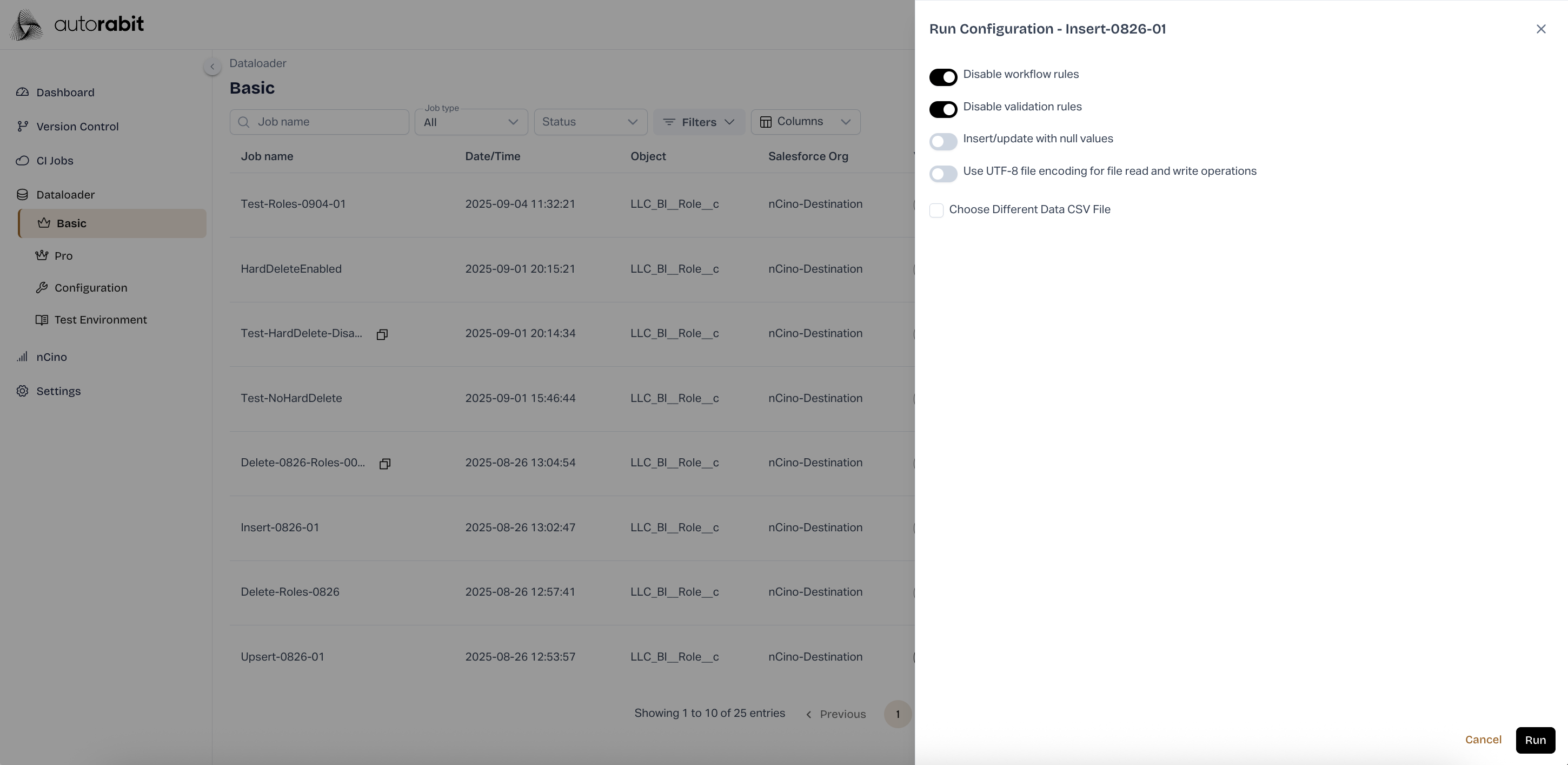
When running a DataLoader job, both the validation rules and workflow rules can be disabled.
* **Validation Rules** – All validation rules associated with the relevant Salesforce objects are temporarily deactivated, allowing data migration without validation errors. Once migration completes, the rules are automatically reactivated.
* **Workflow Rules** – Similarly, all workflow rules are temporarily disabled to ensure smooth data transfer without unintended triggers. After migration, ARM restores these workflows to their active state.
This combined option ensures uninterrupted data migration while preserving the integrity of Salesforce configurations by reactivating both validation and workflow rules post-migration.
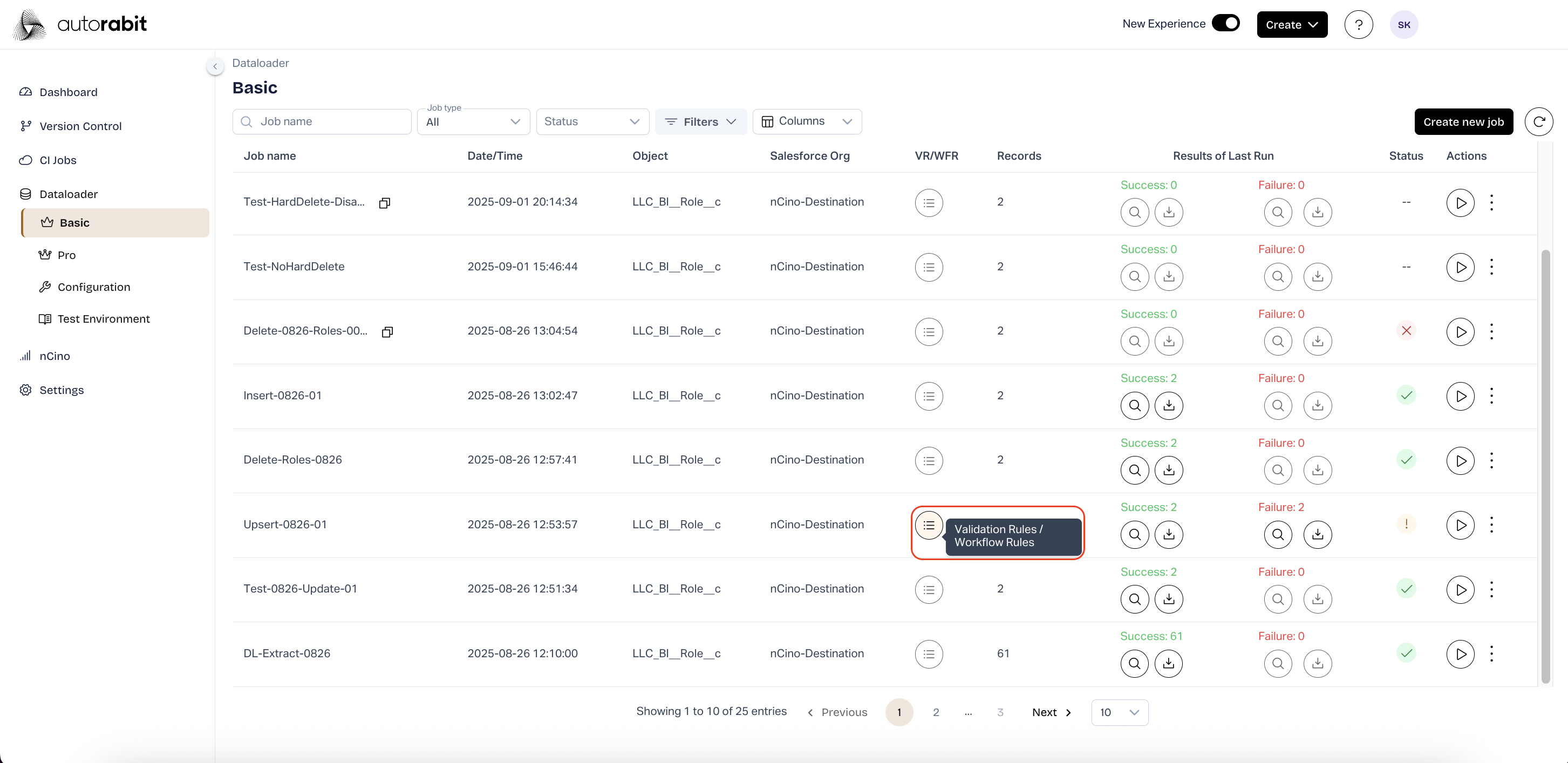
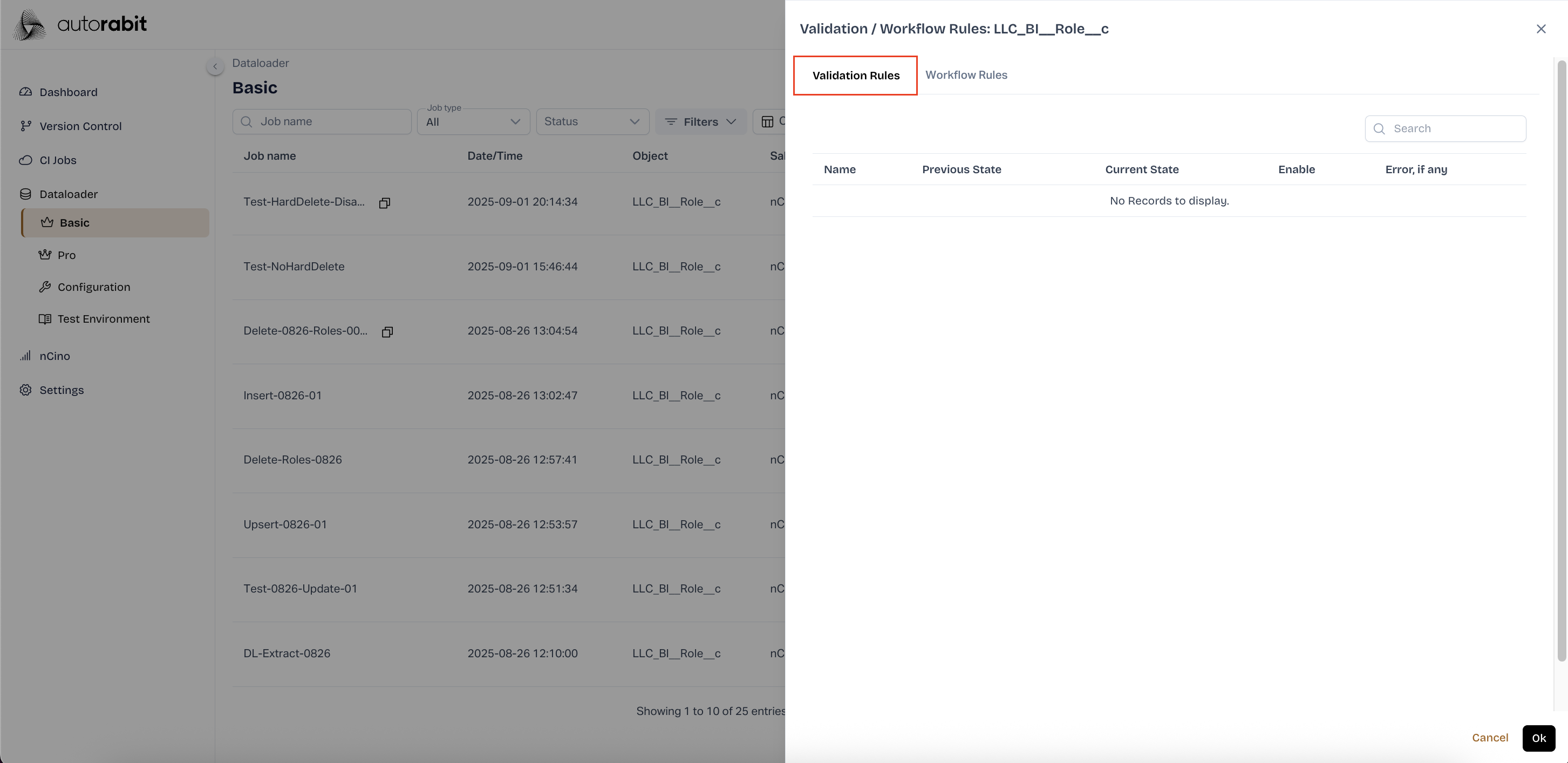
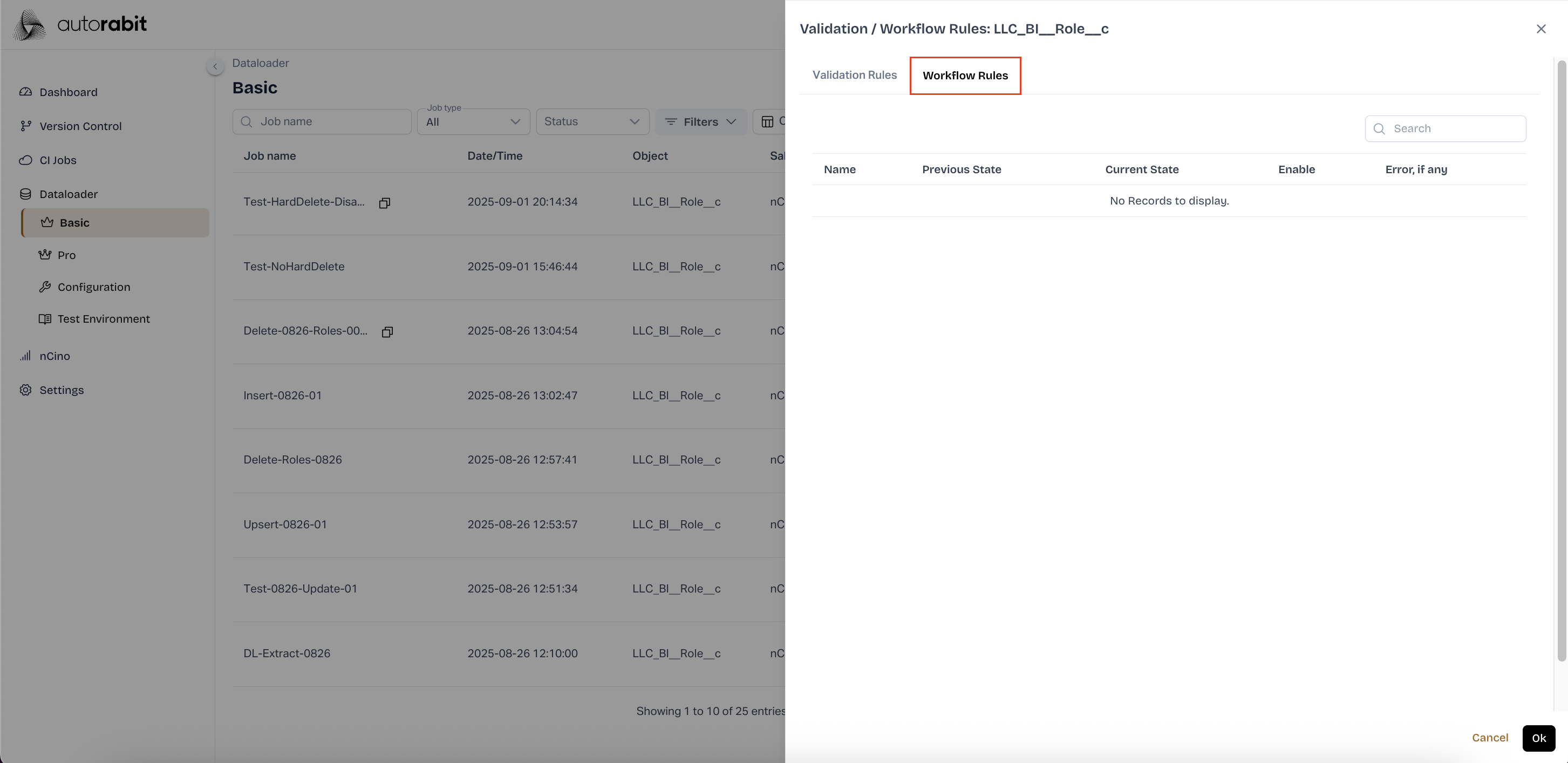
Starting with ARM version 20.1, all validation rules are listed in the ARM UI. Users may review and manually re-enable rules as needed.
**Screen 1: Successful Validation/Workflow Rule Execution**
**Screen 2: Failed Validation/Workflow Rule Execution**
***
---
# Agent Instructions
This documentation is published with GitBook. GitBook is the documentation platform designed so that both humans and AI agents can read, navigate, and reason over technical content effectively. Learn more at gitbook.com.
## Querying This Documentation
If you need additional information that is not directly available in this page, you can query the documentation by asking a question.
Perform an HTTP GET request on the following URL with the `ask` and `goal` query parameters:
```
GET https://knowledgebase.autorabit.com/product-guides/arm-1/arm-features/dataloader/validation-workflow-rules.md?ask=&goal=
```
`ask` is the immediate question: it should be specific, self-contained, and written in natural language.
`goal` is what the user is ultimately trying to achieve, the reason they need the answer. Sharing it helps GitBook give you a better, more relevant answer. A goal is most helpful when it describes the outcome the user wants rather than restating the question. For example, with `ask=how do I create an API token`, a goal like `automate deployments from our CI pipeline` lets GitBook tailor the answer to that use case.
The response will contain a direct answer to the question and relevant excerpts and sources from the documentation.
Use this mechanism when the answer is not explicitly present in the current page, you need clarification or additional context, or you want to retrieve related documentation sections.